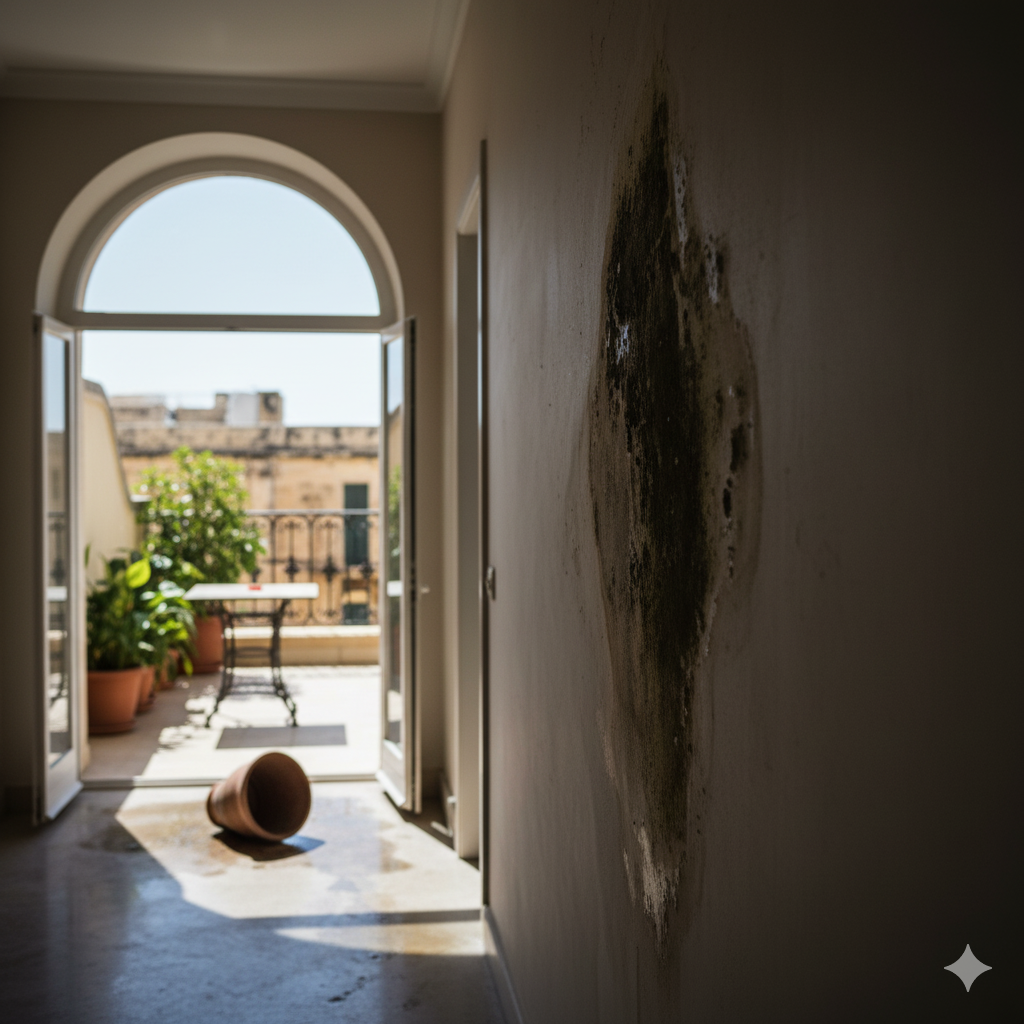
Sliema Common Area Damp: A neighbour dispute in the making
Our client had purchased a lower-level area to extend her home, but neighbours insisted the ingress came from her terrace. We came in as neutral specialists to test that claim.
Step 1: Clear the client’s apartment
We ran a visual inspection and thermal scan of her space. No cold tracks, no active leak signatures. That allowed us to say, confidently, that as of the inspection, her apartment was not the source.
Step 2: Investigate the affected level
In the adjacent open-plan area, the ceiling showed diffuse damp, with a wet concentration near one side room. Inside that room, the right-hand wall was visibly wet. Outside the same area we found a drain pipe and unplastered external wall sections—both classic pathways for water to enter.
Step 3: Re-check her terrace
We noted cracks and gaps that should be maintained—however, the soffit below her terrace was damp rather than wet, unlike the neighbour’s hotspot. That nuance matters in diagnosis.
The balanced conclusion
Our report separated maintenance items (client’s terrace) from the primary ingress (external detailing and suspect pipe). By focusing on evidence patterns, the condo could prioritise works and reduce friction between neighbours.
Need an impartial view for condo disputes? Our [Thermal Imaging] surveys document what’s truly happening, not just what’s assumed.