
A ceiling stain tells you where water appeared, not always where the leak started. Water can travel along slabs, pipes, beams and finishes before showing itself.
That is why the right next step is a professional ceiling leak inspection. Painting over the stain or opening the nearest tile may only hide the worry for a while.
Common sources a specialist may need to consider
- Bathroom or shower leaks above.
- Terrace, roof or balcony ingress after rain.
- Hot or cold water pipe leaks.
- Drainage or waste pipe defects.
- Condensation or moisture trapped in building materials.
What to prepare before the visit
Before booking, note where the stain appears, what sits above it, whether nearby bathrooms, external walls or terraces may be involved, and whether it changes after rain or water use. That context helps plan the right inspection.
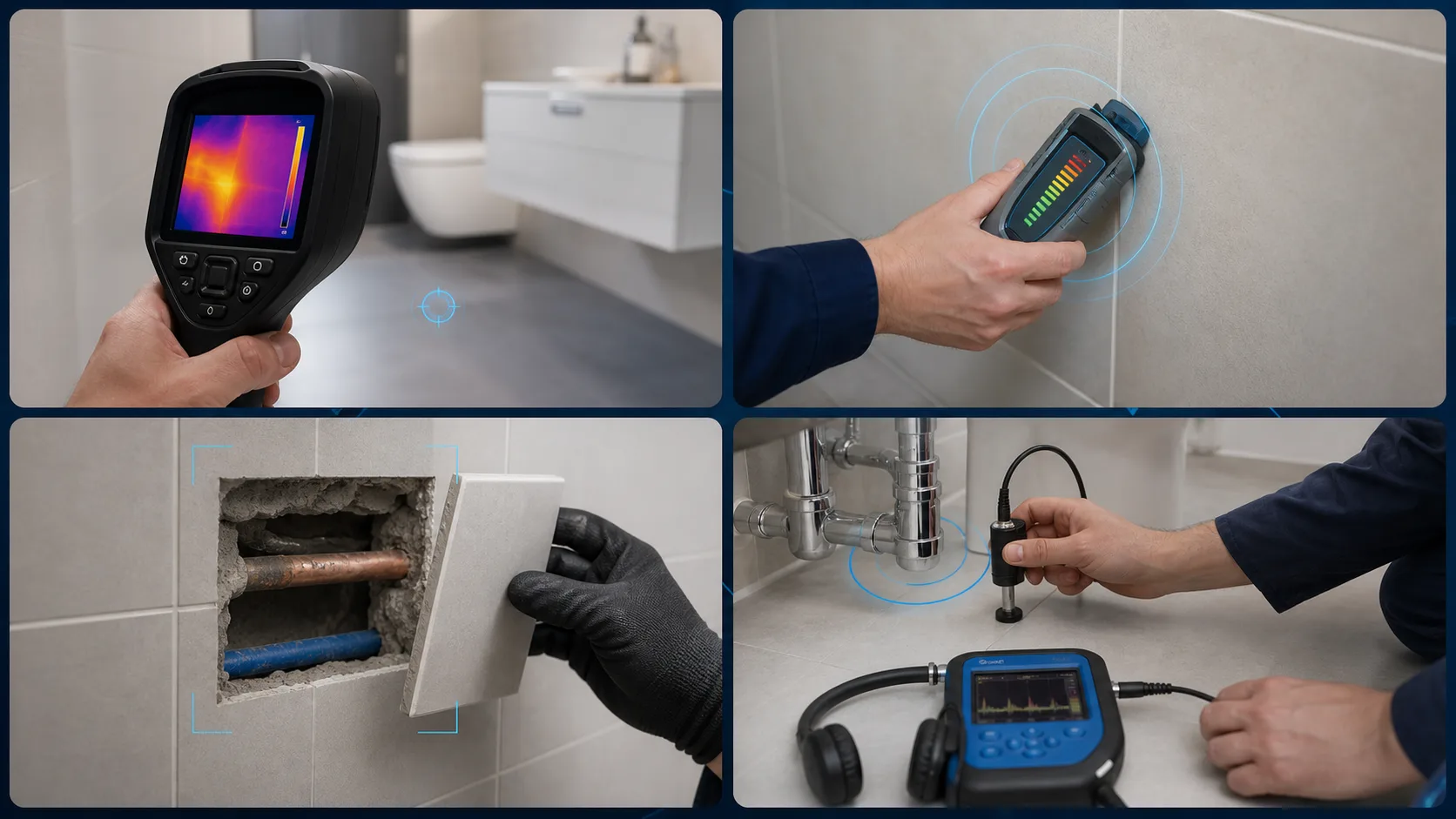
Remote information is not the diagnosis. The professional check may involve thermal imaging, moisture mapping, access checks and practical building investigation on site.
Why detection comes before repair
Repairing the visible stain without finding the source usually means the mark returns. A damp and moisture inspection aims to locate the likely cause so the repair is targeted.
If the stain is new, spreading or linked to a neighbour above, book the inspection before the damage becomes a bigger argument or a bigger repair.