
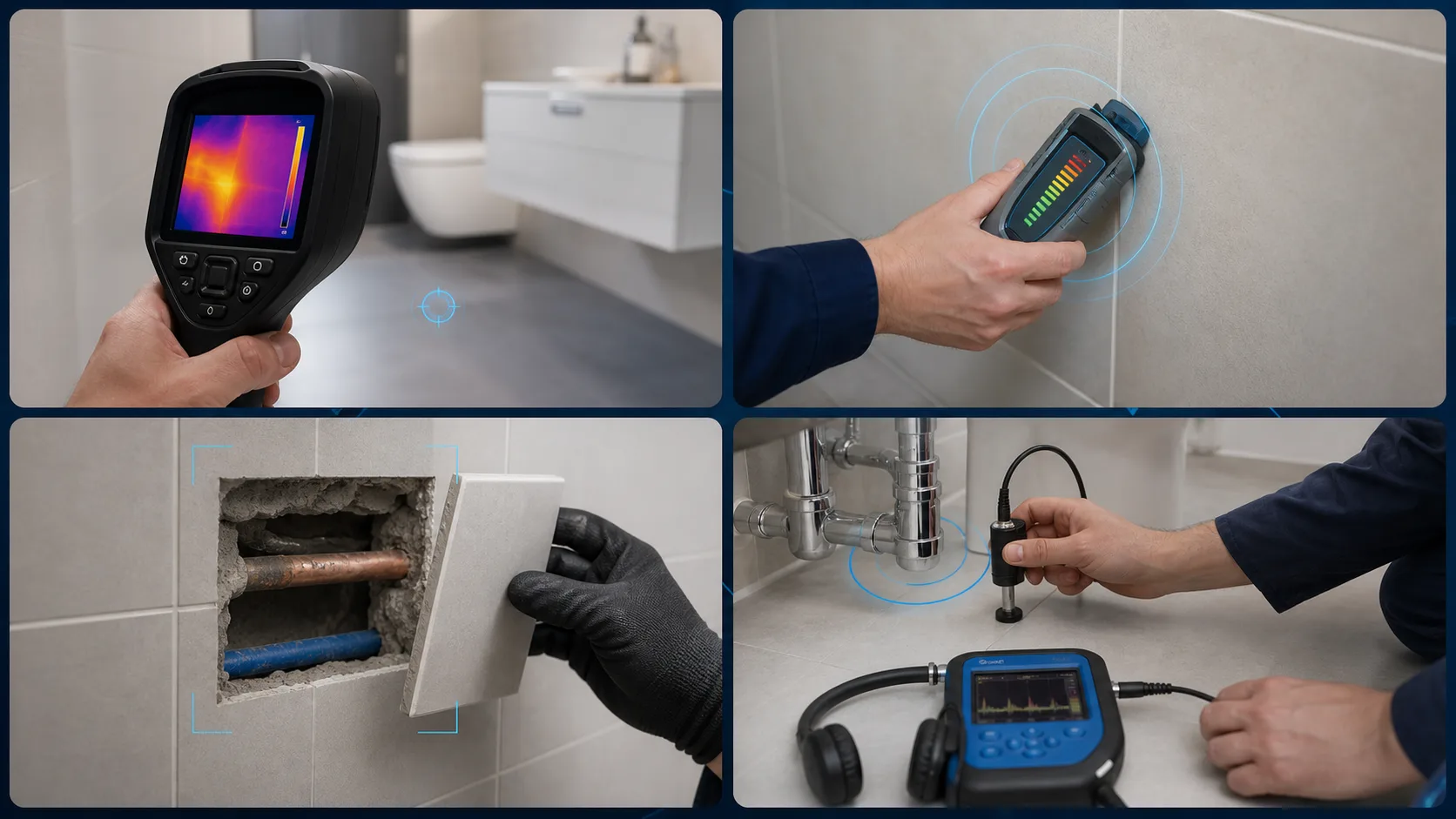
Thermal imaging is useful because water, damp materials and hot pipework can change the temperature pattern of a surface. A trained inspection can use those patterns to decide where to investigate further.
It is also important to be honest: a thermal camera does not literally see water through walls. It reads temperature differences. Those readings need interpretation and, where needed, confirmation with moisture checks, acoustic methods or pressure observations.
That is exactly why you book a professional thermal leak detection inspection instead of trying to decide from an isolated image or basic thermal reading.
Where thermal imaging helps
- Hot water pipe leaks behind floors, walls or bathroom finishes.
- Damp ceilings or walls where the leak path is not obvious.
- Terrace, roof or facade ingress after rain.
- Apartment leaks affecting the property below.
- Evidence images for landlords, administrators and insurers.
Why professional thermal imaging matters
Leak Detection Malta uses professional thermal imaging equipment. That matters because inspection quality depends on both the equipment and the operator. The camera helps produce clearer thermal evidence than basic entry-level tools.
For stronger findings, thermal imaging may be combined with water leak detection, damp moisture inspection or leak detection reports, depending on the property and the symptom.
Best next step
If you have a damp patch or suspected hidden leak, use WhatsApp to arrange the inspection visit. Tell us where the symptom appears and when it changes. The professional assessment happens on site, where the thermal image can be interpreted in context.