
The client reported mould along a corridor wall next to a bathroom. The visible mould was the symptom, but the inspection needed to identify how the wall was being wetted.
Inspection Findings
The bathroom envelope was checked first, including the bath, shower, adjacent walls and back-to-back cupboards.
Two likely moisture paths were found:
- A crack behind the freestanding bath where splashes could migrate into the wall area.
- Degraded shower grout that allowed repeated water movement through the shower enclosure.
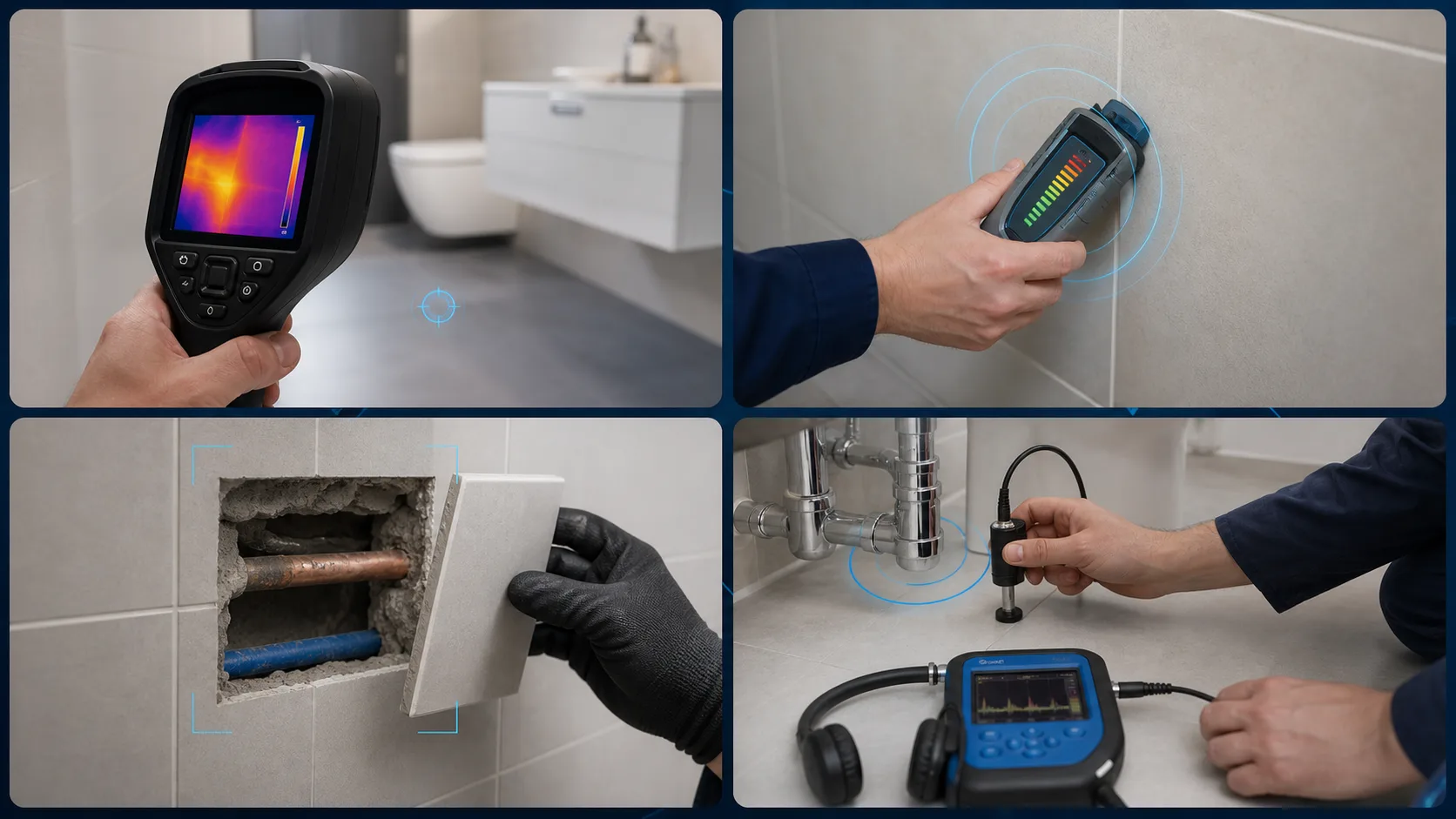
A cupboard behind the shower also showed secondary mould. Thermal patterns matched repeated wetting and drying rather than one isolated surface stain.
Recommended Repairs
The recommended works were targeted rather than excessive: repair or replace the bath detail, re-grout the shower including corners and upstands, dry the affected surfaces and improve bathroom extraction.
The aim is to stop the moisture route first, then clean and reinstate the affected finishes.
Why Bathroom Mould Needs A Source Check
Mould around a bathroom is often blamed on ventilation alone. Ventilation matters, but if water is repeatedly passing through cracked bath edges or failed grout, extraction will not solve the root problem.
Our bathroom leak detection service checks pipework, drains, shower seals, grout, bath edges and adjacent rooms. For walls already affected by mould or damp, a damp and moisture inspection helps confirm what needs to dry before repairs begin.