
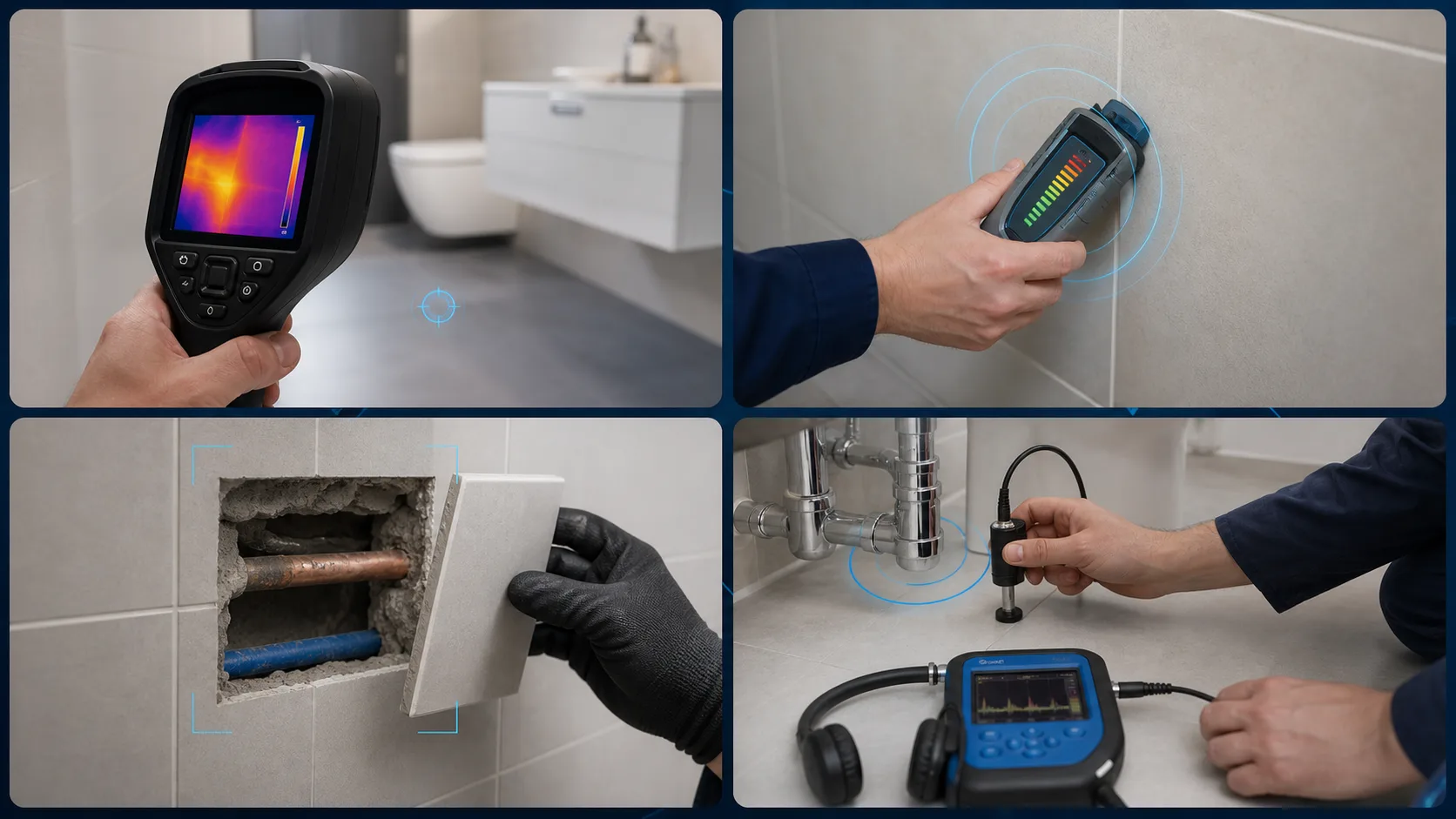
Persistent damp in a hotel stairwell can quickly become a guest-facing problem. In this Qormi boutique hotel, the owner had water damage along the stairway walls but no obvious visible pipe leak.
Rule Out The Supply Lines First
The inspection started with the plumbing layout and the damage history. Thermal readings were taken across the affected zones and a wider thermal sweep checked for cold tracks along suspect pipe routes.
Hot and cold supply lines were then pressure-tested. Both tests were clean, which meant the investigation had to move away from pressurised plumbing and towards drainage.
Controlled Use Check
The layout suggested that the drain run between the laundry area and the rooftop guest toilet could be allowing water into the structure.
The client was asked to avoid using the laundry for three days while the stairwell was monitored. On the return visit, fresh thermal images showed a clear reduction in water ingress.
That did not prove every detail on its own, but it gave a strong direction for the next test.
Flood Testing The Drainage Route
A hot water flood test on the upper-floor drainage helped map the route and provoke hidden escape paths. Two suspect locations were identified and opened with the owner and plumbers present.
Because the tests had narrowed the search area, opening works could be targeted instead of disruptive across the hotel.
Lesson For Hotels And Guest Accommodation
If supply pressure tests are clean, drainage should stay on the list. Laundry areas, rooftop toilets, gullies and waste runs can all create intermittent water ingress that appears far from the actual fault.
For guest-facing premises, commercial leak detection and thermal leak detection help reduce disruption and provide clearer next steps. Where records are needed for owners, contractors or insurers, a leak detection report can document the findings.