
A Sliema condominium association called us about water pooling near the garage ramp. In a shared block, that kind of symptom can become a frustrating argument unless the investigation is structured.
The inspection started from the garage level and moved upwards, checking shafts, apartments and visible water paths.
Floor-by-floor inspection
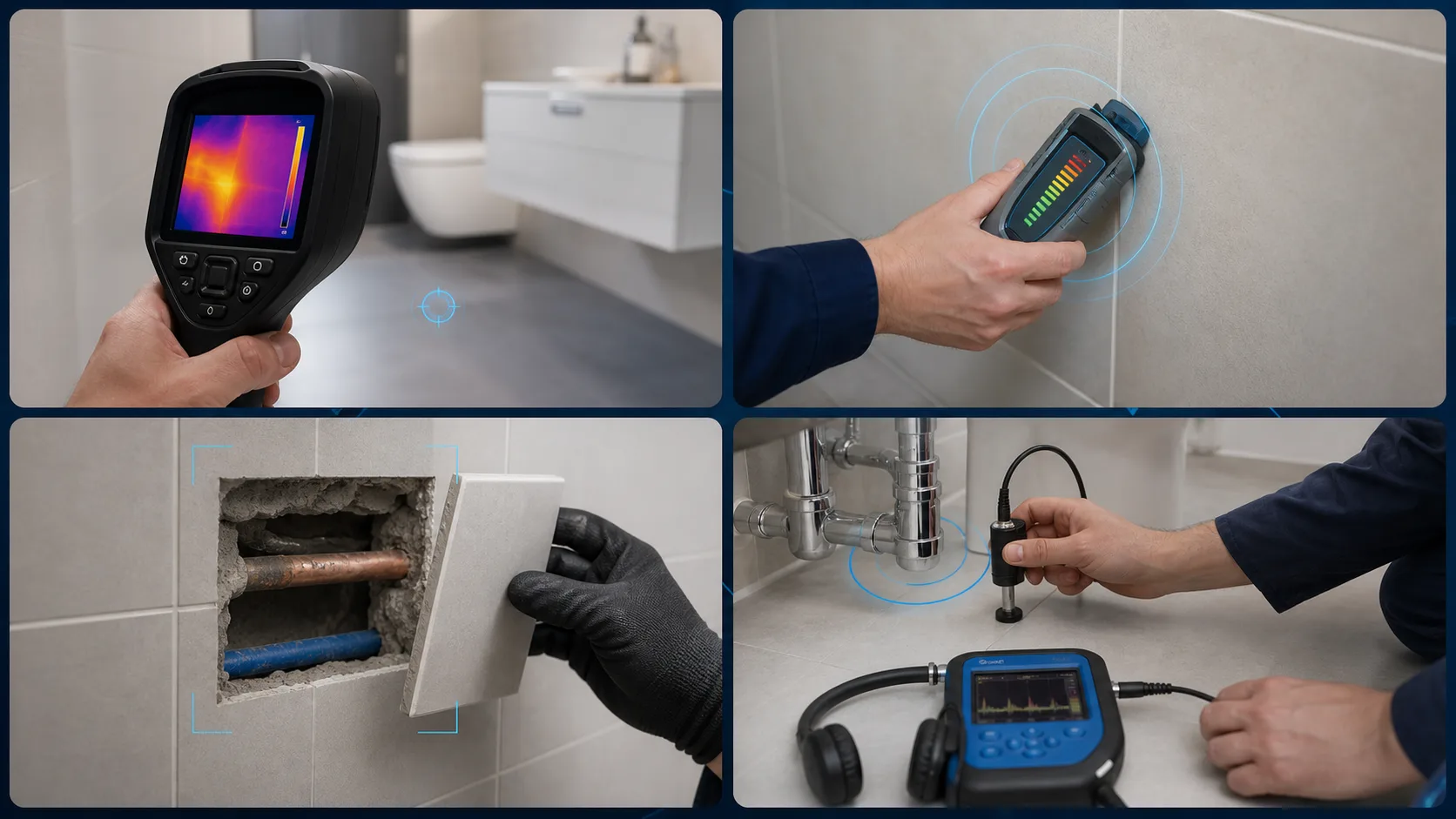
Thermal imaging helped identify cold zones and possible tracking routes. Acoustic listening was used where active flow was suspected. At ground level, the cold zones clustered around vertical shafts, and opening the shafts showed water travelling down from higher levels.
As the inspection moved up the building, the same pattern repeated: water was arriving from above rather than starting at the garage ramp itself.
What was found
On Level 5, a kitchen drain was not discharging properly into the hopper. Water was spilling into the shaft instead of entering the intended pipework.
Several AC drain lines were also missing the hopper, adding more water to the same route. Separately, the shaft terminating by the garage ramp was not properly sealed, allowing water to escape where residents were noticing it most.
Recommendations
- Realign kitchen and AC drains so they discharge into the hopper.
- Seal the shaft properly from top to bottom.
- Keep access possible for future maintenance.
- Use written findings to help the administrator and contractors coordinate the work.
These repairs were expected to address the main observed routes, but shared-building leaks should always be monitored after repairs. For similar situations, book Sliema leak detection or apartment block leak detection before the issue becomes harder to resolve.