
High water bills are often the first sign of a hidden leak. In this Hamrun case, the client had abnormal water consumption but no obvious visible leak inside the property.
The Problem
The first step was to understand the pipe layout. The client walked us through the property, including the apartments and common areas, so the inspection could follow the most likely water routes rather than relying on uncertainty.
For cases like this, our high water bill leak detection service is built around evidence: meter behaviour, visible damp signs, pipe routes and acoustic testing.
What The Acoustic Inspection Found
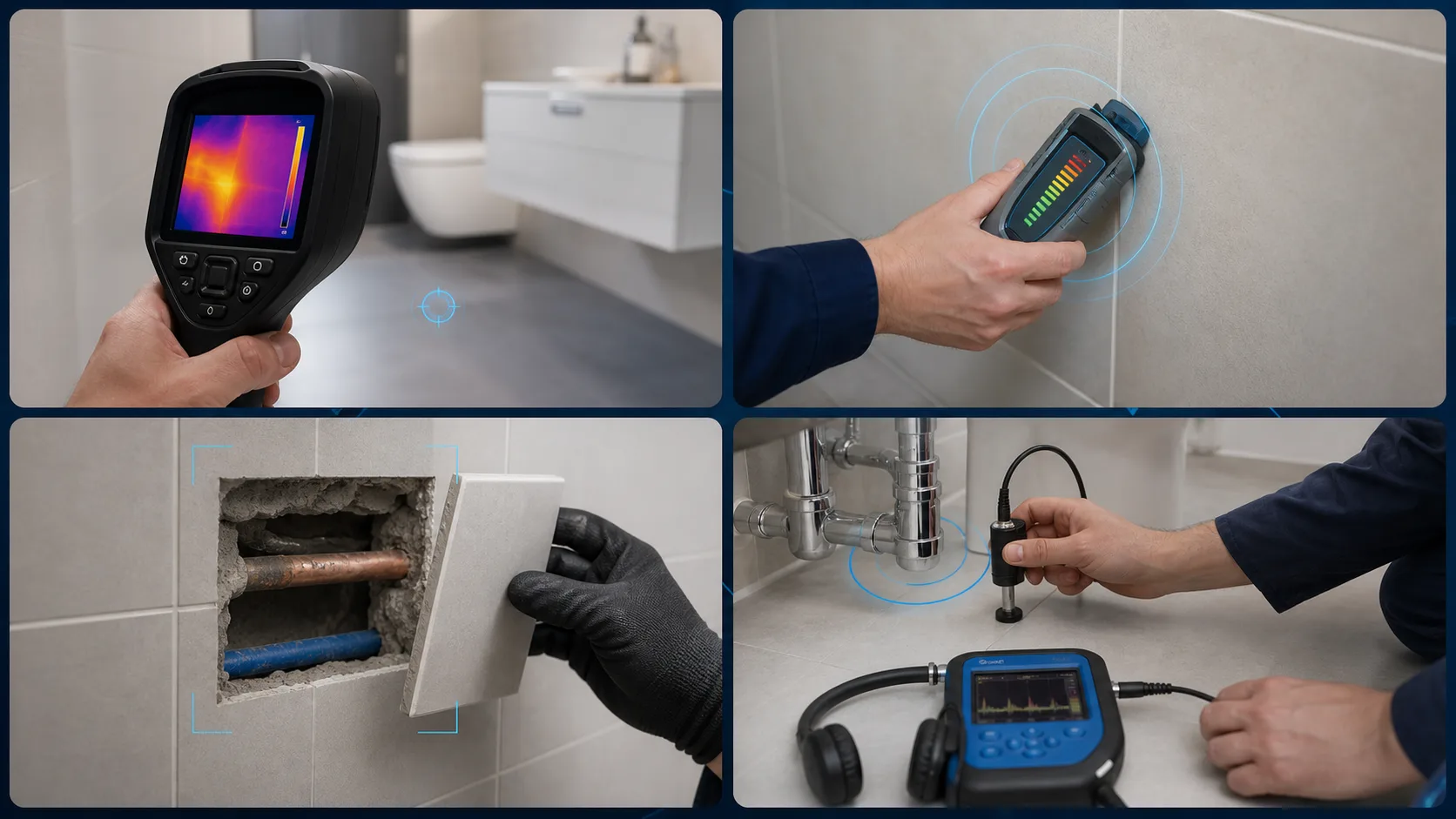
Using acoustic leak detection equipment, the strongest water noise was traced to a wall in the common area. The signature suggested active water movement behind the wall rather than a random damp patch or surface moisture.
This is where specialist equipment matters. Acoustic tools such as Gutermann leak detection technology help narrow the search before anyone starts opening finishes.
The Access Problem
The likely pipe route appeared to pass through a shaft. Access was not straightforward because the only practical entry point was through a neighbouring shop, where shelving blocked the area.
That finding changed the recommendation. Instead of simply marking a leak point and leaving the client with a difficult future maintenance problem, we discussed a more practical route: rerouting the pipework from the water meter to the roof tanks so that future inspection and repair access would be easier.
Report And Next Steps
Where needed, cases involving abnormal consumption can also be supported with a written leak detection report. Some clients may then discuss their situation with the Water Services Corporation, although any rebate or claim decision remains outside our control.
If your bill has suddenly jumped and you cannot see where the water is going, arrange a water leak detection inspection before the leak causes more damage or cost.