
Bedroom damp behind furniture can remain hidden for a long time. By the time a musty smell appears, moisture may already be affecting plaster, wardrobes, skirting or the wall behind the bedroom.
In this Marsaxlokk villa case, the owner noticed dampness behind a wardrobe. The area was difficult to access, so a professional inspection was needed before deciding where to open.
What was checked
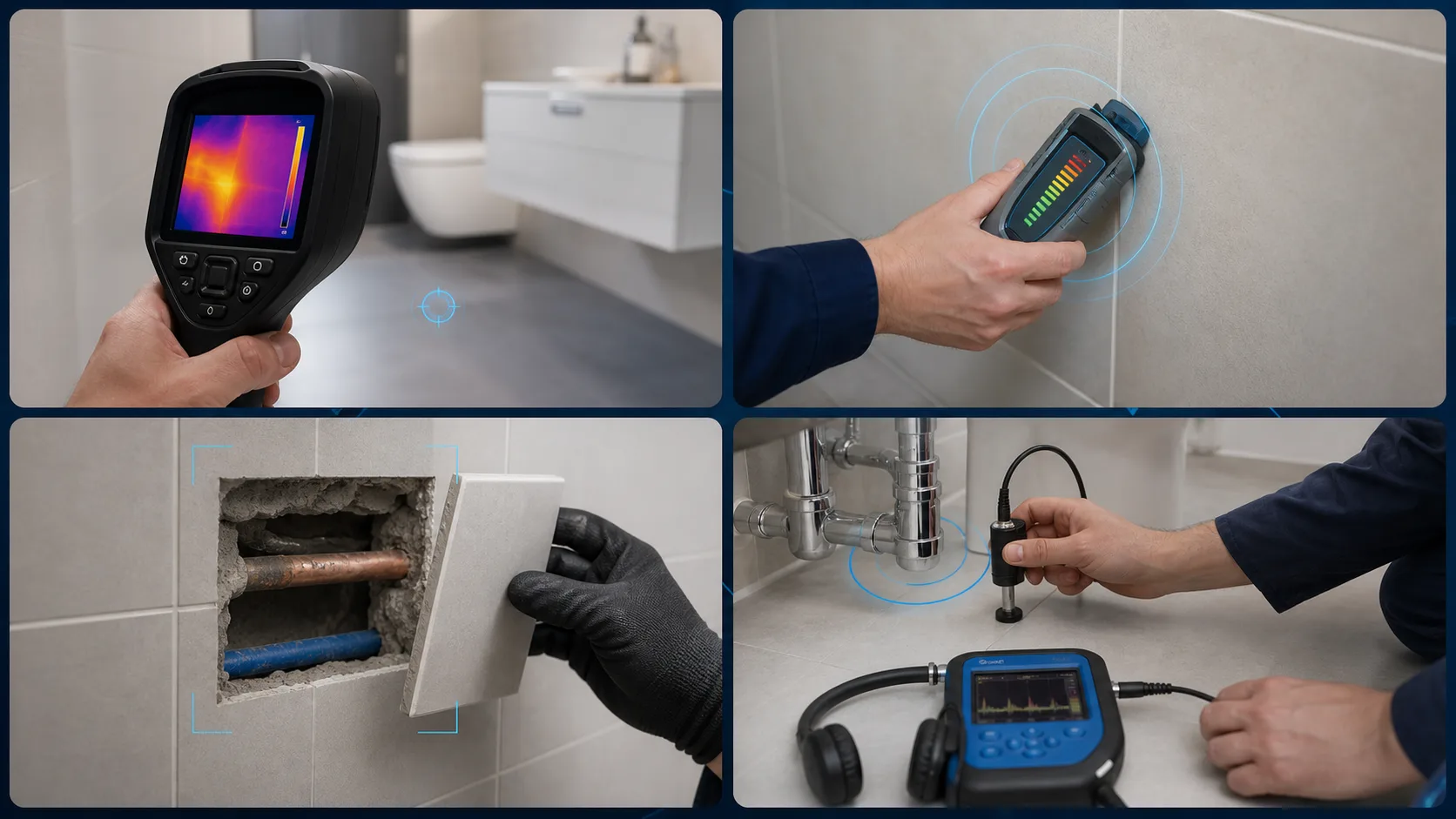
The inspection started with the property layout, the adjacent rooms and the likely pipe routes. Moisture readings and thermal imaging were used to map the damp pattern. Acoustic listening was also considered where pipework behaviour could help narrow down the source.
The evidence pointed toward a concealed issue near the shower cubicle wall adjacent to the bedroom. That gave the owner a more controlled repair target instead of removing finishes across the whole bedroom.
Why the bedroom symptom mattered
Bedroom damp can be misread as condensation, rising damp or a ventilation issue. Sometimes that is true, but in this case the proximity to the shower wall made a plumbing/wet-area source more likely.
Recommended action
The repair team could access the suspected area by removing a small number of tiles rather than carrying out wide destructive work. After repair, the affected area needed time to dry and should be monitored before final reinstatement.
If you smell damp behind wardrobes or see moisture in a bedroom, book a professional water leak inspection before treating it as a cosmetic problem.